
Why Personality Beats Product Shots for Restaurant Marketing in 2026
I’m going to say something that might feel counterintuitive for a content creator who shoots food for a living: the perfectly styled flat-lay of your signature dish is no longer your best marketing tool.
It’s still useful. It still has a place. But if your entire Instagram strategy is “photograph the food and post it with a nice caption,” you’re playing a game that stopped working about eighteen months ago.
The restaurants I see growing right now, the ones adding followers who actually walk through the door, are doing something different. They’re building characters. They’re telling stories. They’re giving people something to get attached to that isn’t on the menu.
The shift nobody talks about
Here’s what the data actually says. Deloitte Digital studied restaurant brands and found that “social-first” restaurants, the ones leading with community and personality content, achieved 14.1% revenue growth compared to 9.9% for the average. And 93% of those top performers prioritise community management over polished content production.
Buffer analysed over 52 million posts and found that accounts where real humans reply to comments and show up as themselves see dramatically higher engagement. Up to 21% higher on Instagram alone.
And here’s the stat that should change how every restaurant owner thinks about content: employee-shared content gets 8x more engagement than brand content. Eight times. When your bartender posts a story about a chaotic Friday night, it structurally outperforms whatever your brand account is doing with that beautifully lit burger shot.
What “micro character moments” actually look like
I started calling this the “micro character moment” approach with my clients because it captures what’s happening at the ground level. It’s not about producing a documentary. It’s about catching the small, real moments that give your place its personality.
For one of my clients, Joeys here in Brisbane, the content that performs best isn’t the food. It’s the staff. It’s the energy of a packed dining room on a Saturday night. It’s the barista who knows everyone’s order. It’s the quiet moment on a Monday morning when someone’s prepping for the week ahead.
These moments feel real because they are real. And audiences can tell the difference.
Here’s what this looks like in practice:
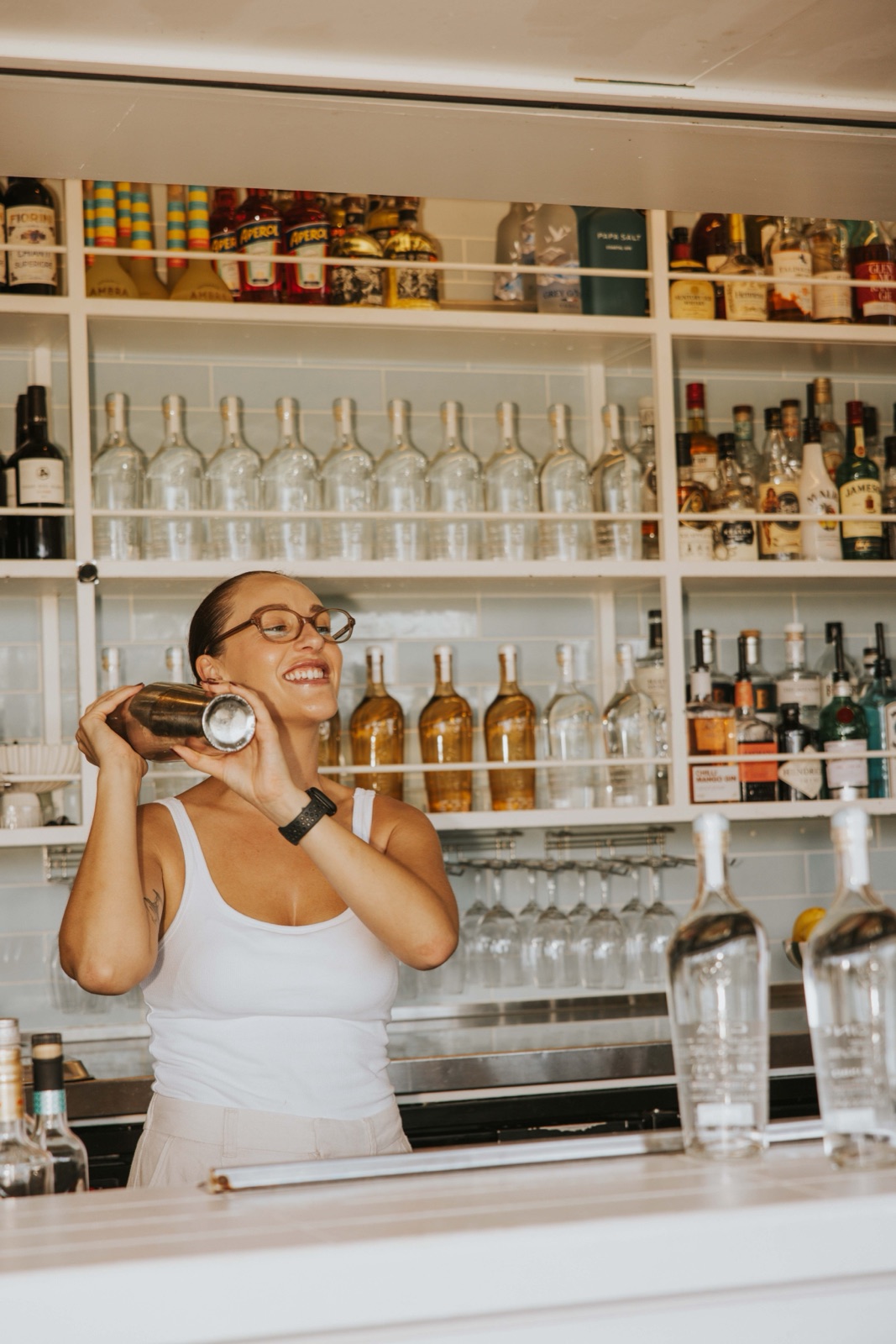
Staff intros that feel human, not corporate. Not “Meet Sarah, she’s been with us for 3 years.” More like capturing Sarah mid-laugh while she’s telling a regular about the new dessert. The context tells the story better than a caption ever could.
The chaos and the calm. Friday night energy is compelling content. But so is the empty restaurant at 6am when someone’s setting up chairs and the light’s coming through the windows. Both tell your audience something about what this place feels like.
Regulars’ stories. The couple who comes every Thursday. The tradie who orders the same thing at 6:30am. The group of friends who’ve been doing Tuesday dinners for a year. These people are characters in your restaurant’s story, and your audience will follow their arcs the way they follow a TV show.
Behind-the-bar moments. Not polished “day in the life” content. Just genuine snippets of what it looks like to work there. The banter. The problem-solving. The pride someone takes in getting a cocktail right.
Why the algorithms are enforcing this
This isn’t just a creative preference. The platforms are structurally rewarding this type of content.
Instagram’s head Adam Mosseri confirmed the three signals that matter most in 2026: watch time, DM shares, and likes relative to reach. When someone sends your content to a friend via DM, Instagram treats it as one of the strongest endorsements possible. And people share moments with people in them. They don’t DM each other photos of a flat-lay.
TikTok is even more aggressive about it. They’re actively identifying and deprioritising AI-generated videos and mass-produced content, while weighting shares and saves over passive likes. The content that gets saved and shared is almost always something emotionally resonant, something with a human in it.
Both platforms have essentially decided that the future of social media is human, and they’re adjusting their algorithms to enforce it.
The trust problem that makes this urgent
There’s a deeper reason why this shift is happening now, and it’s not going away.
AI-generated content has crossed a threshold. Squarelovin reports that 88% of users say AI content has weakened their trust in social media. Hootsuite found that AI-generated articles surpassed human-written content online for the first time in 2025. Nearly a third of consumers are less likely to choose brands using AI ads.
The internet is flooding with generated content that looks polished but feels empty. And audiences are developing a sixth sense for it. As Tameka Bazile from Business Insider put it: “Audiences can feel when something wasn’t made by a real person. They crave human tone, real experience, and the imperfections that make content relatable.”
For restaurants, this is actually great news. You have something that AI can never replicate: real people, real moments, and a real place. The restaurant that leans into showing those things authentically is going to stand out more and more as generic content floods every feed.
Where food photography still fits
I’m not saying stop photographing your food. Your menu items still need to look incredible, and those shots work well for ads, menus, Google Business profiles, and the occasional hero post.
But in terms of your ongoing content strategy, the mix should be shifting. Think of food shots as supporting content, maybe 20-30% of what you post. The other 70-80% should be people, moments, energy, and personality. That’s what builds the following. That’s what makes someone say “I need to go to this place.”
The uncomfortable truth
Here’s why most restaurants haven’t made this shift yet: it’s harder to execute well.
A food flat-lay is relatively predictable. You plate it, light it, shoot it, post it. Character-driven content requires someone who knows how to find the right moments, frame them properly, and edit them in a way that feels natural rather than forced. The lighting needs to work. The pacing needs to feel right. You need to know which moments to capture and which to skip.
This is where professional content creation becomes genuinely valuable, not because the equipment is expensive, but because knowing how to see and capture personality in a way that feels authentic takes real skill. Anyone can photograph a plate. Finding the moment where your bartender’s personality comes through in a way that makes 10,000 people feel like they know them personally, that’s the work.
Getting started
If you’re a restaurant owner reading this and thinking about shifting your content approach, here are a few things you can start doing this week:
Point the camera at your team more than your food. Even with a phone. Get comfortable capturing the people who make your place what it is.
Film the transitions. The shift from empty to packed. The moment the first order comes in. The last table leaving. These are natural story beats that audiences connect with.
Let imperfection in. The wobbly camera, the background noise, the half-heard conversation. These signals tell your audience this is real, and that signal is worth more than production value right now.
Think in characters, not posts. Your staff, your regulars, your suppliers. Give your audience recurring faces to get attached to. This is what turns a follower into someone who actually walks through your door.
If you’re trying to find a creator who can capture personality this way, here’s what to look for when hiring a Brisbane content creator.
If you’re running a Brisbane restaurant and want to explore what character-driven content could look like for your place, take a look at our packages or get in touch. This is the work I genuinely love doing.