
What to look for when hiring a content creator for your Brisbane business
If you’re a Brisbane business owner looking to hire a social media content creator for the first time, it can feel a bit like buying a car. There are dozens of options, the pricing seems arbitrary, everyone claims they’re the best, and you can’t really tell the difference between the good ones and the average ones until you’ve already committed.
I’ve been on the receiving end of these conversations for over a decade, and I’ve also seen plenty of businesses come to me after they’ve already been burned by a bad hire. So I want to give you a practical framework for what actually matters when choosing a content creator in Brisbane, what the red flags look like, and why a few specific things tend to separate the creators who deliver from the ones who don’t.
Start with the portfolio, not the pitch
The single best predictor of what a content creator will produce for you is what they’ve already produced for someone else. This sounds obvious, but a surprising number of business owners get swept up in a polished pitch deck or a confident personality and forget to actually interrogate the work.
When you’re reviewing a portfolio, you’re looking for a few specific things. First, does the work look like it was made for the client’s audience, or does it look like it was made for the creator’s own Instagram? These are very different things. A content creator who consistently produces work that feels on-brand for the businesses they’ve worked with is showing you that they can adapt, which is the most important skill in this job.
Second, look for consistency across their portfolio, not just one or two standout pieces. Anyone can produce one great Reel. The question is whether they can produce solid work month after month without dipping below a quality bar. Ask to see three consecutive months of work for a single client if you can. That tells you more than a highlight reel ever will.
Third, ask them about context. Pick a piece of work in their portfolio and ask why they made the creative choices they made. A good creator will talk about the client’s goals, the audience, the strategy behind the content. A mediocre one will talk about the camera settings or the colour grade. The gear is the least interesting part of the conversation.
The red flags that cost you money
Over the years I’ve noticed a pattern with the creators who tend to underdeliver. There are a few warning signs that show up before you even sign anything, and they’re worth paying attention to.
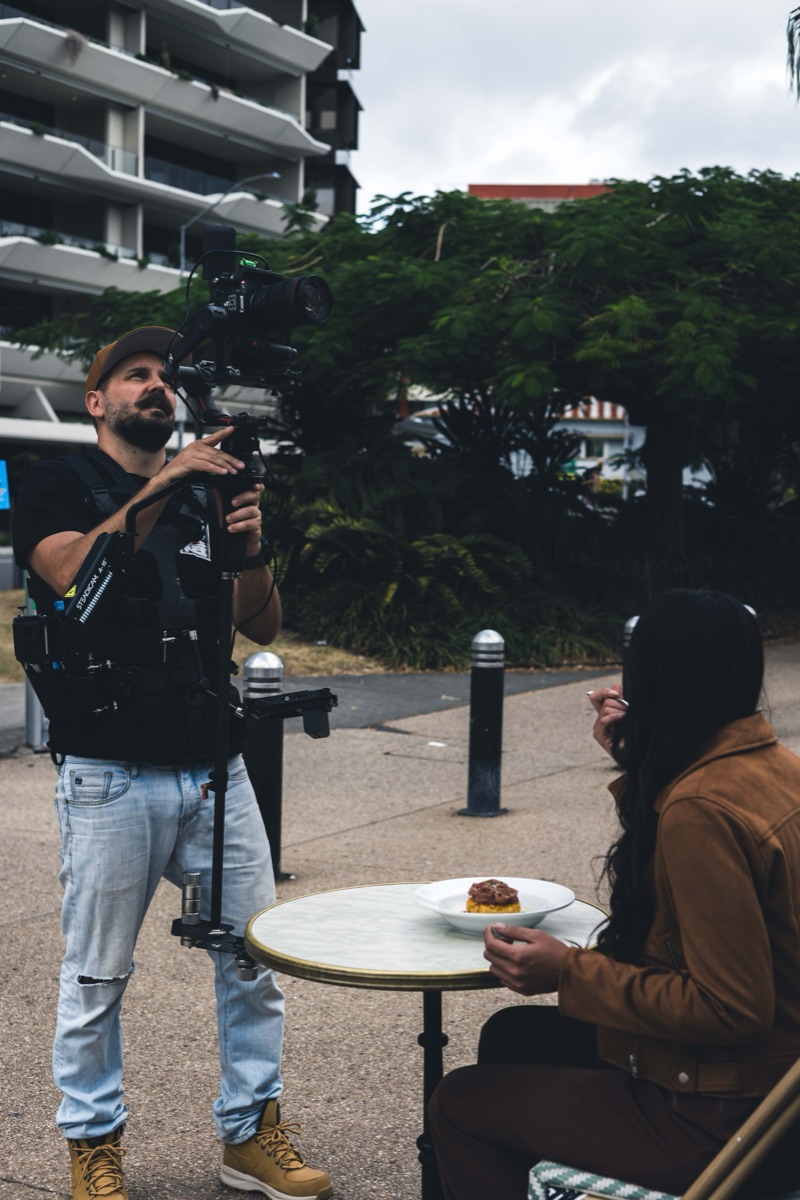
No process beyond “turn up and shoot.” If a creator can’t walk you through what happens before and after the shoot day, that’s a problem. The shoot itself is maybe 15% of the total work in a quality content partnership. If they’re not talking about strategy, planning, mood direction, editing timelines, and delivery schedules, they’re probably just showing up with a camera and hoping for the best. Sometimes that works. Usually it doesn’t.
Unclear deliverables. You should know, before you sign anything, exactly how many photos, videos, Reels, or whatever else you’re getting per month, when you’ll receive them, and what “done” looks like. If the conversation feels vague or evasive around deliverables, that vagueness will follow you into the engagement and you’ll spend months trying to pin down what you’re actually paying for.
They don’t ask about your business. A content creator who wants to talk about your business goals, your target customer, what’s worked and what hasn’t, is someone who’s thinking about strategy. A creator who jumps straight to “when can we shoot?” is someone who’s thinking about the transaction. Both types exist in Brisbane. The first type will serve you better.
They don’t have local references. This one matters more than people think. If a Brisbane-based creator can’t point you to a single local business that would vouch for them, ask yourself why. Word of mouth is the primary way content creators build their client base in this city. If nobody is talking about them, there might be a reason.
Ask what they can actually shoot with
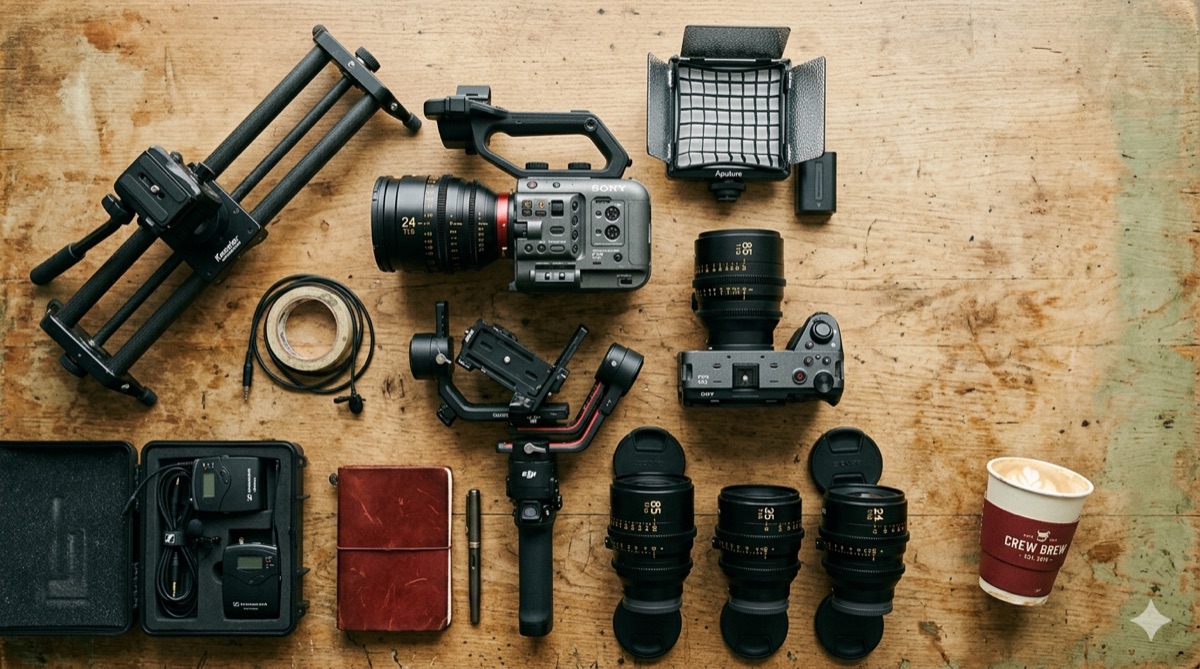
This one gets glossed over a lot, but it’s worth asking directly: what gear does the creator own, and what does that mean for the work they can deliver? You’re not asking because gear specs matter on their own. They don’t, and any creator who leads with brand names is one I’d be wary of. You’re asking because the kit someone owns sets the ceiling on what they can realistically produce for you.
A creator with one camera and one lens can make great content in the right conditions. But the moment a shoot needs two cameras rolling on an interview, smooth movement through a space, a wide and a tight cut from the same moment, or controlled lighting in a dim venue, the limits of a single setup show up fast.
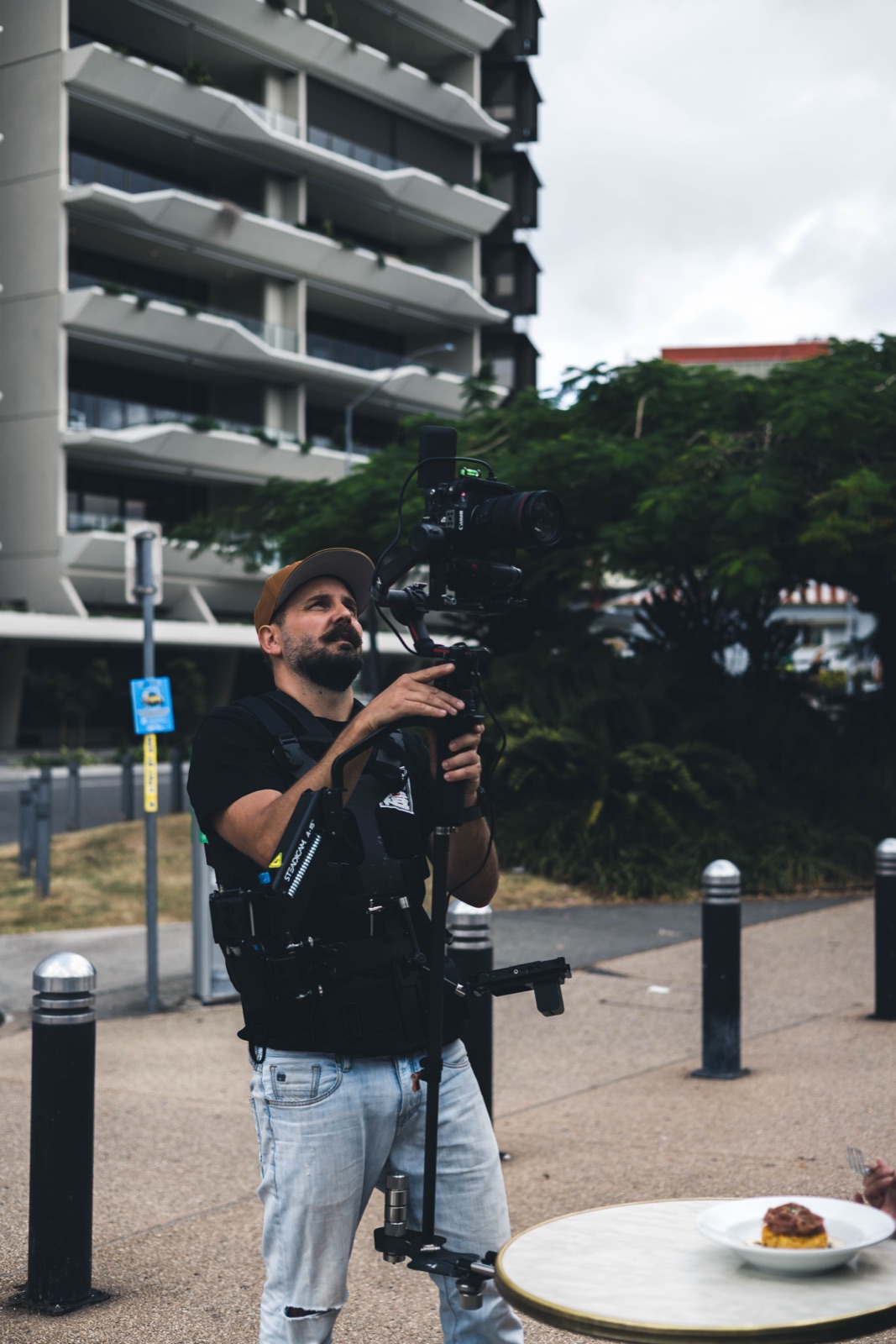
In my own kit I keep multiple cameras for every scenario, gimbals and steadicams for movement, sliders for controlled push-ins, a few different lighting rigs so I can shoot in low-light venues without compromising quality, and a network of operators and second shooters I can bring in when a job calls for it. None of that is showing off, it’s just that different shoots need different tools. A creator who can adapt to whatever’s in front of them is going to deliver a much wider range of output than one who’s locked into a single setup.
When you’re talking to a creator, ask what their kit looks like, ask whether they bring crew when a shoot needs it, and ask what they’d reach for if your shoot required something out of the ordinary. The answers tell you a lot about whether they can scale to what your business actually needs.
Why local and face-to-face matters
Speaking of local, let me make a case for something that might seem outdated in 2026: hiring someone who’s actually here in Brisbane and who will meet you in person.
I know there are plenty of remote content creation services, and some of them produce perfectly fine work. But for the kind of content that actually connects with a local audience, there’s a meaningful advantage to working with someone who understands the city. They know what Fortitude Valley looks like at golden hour. They know which cafes have the best natural light. They know the rhythm of Brisbane, what resonates with local audiences, what feels authentic versus what feels transplanted from a Sydney agency’s template.
Beyond geography, face-to-face relationships just produce better content. When you sit across from someone and talk about your business, the nuance comes through in a way it never does over a Zoom call. I notice things about my clients’ businesses, their team dynamics, the energy of their space, that I wouldn’t pick up if I were working remotely. All of that informs the content.
This doesn’t mean your content creator needs to be in your suburb. It means they should be close enough to visit your business, attend your events, get a feel for your physical environment, and be available for a coffee when plans change. Content is a relationship business, and proximity makes that relationship stronger.

Going through an agency vs hiring a creator directly
There’s a meaningful cost difference between hiring a marketing agency to handle your content and going directly to the creator who’s actually going to do the work. It’s worth understanding what you’re paying for in each case before you commit either way.
When you hire an agency, you’re getting access to a roster of creators they’ve vetted and can deploy quickly, plus all the project management, briefs, scheduling, and back and forth handled for you. That coordination has real value, especially if you also need strategy, paid media, web work, or anything else under the same roof. The tradeoff is that the agency is placing a markup on the creator’s time, sometimes a substantial one, and that markup is what pays for all the overhead.
Here’s the part most clients don’t see. I get approached fairly regularly by agencies wanting to book me for one of their clients, and the rate they’re offering is almost always lower than what the client is being charged, because the agency’s markup has to come out of somewhere. When the operator is being paid less, the operator delivers less. It becomes a very black and white “showed up, shot the brief, sent the files” arrangement. There’s no extra thinking happening, no going beyond what was strictly scoped, because there’s no budget for it. If that same client came to me directly, the markup isn’t sitting in the middle, the budget stretches further, and I can put genuinely more time and care into the work.
If your business needs the full-service treatment, an agency makes sense. But if what you actually need is just good content, going directly to a content creator will usually get you the same output for noticeably less money. You’re cutting out the middle layer. The creator you’d have ended up with through an agency is often happy to work with you directly, and the relationship tends to be tighter because there’s no one translating between you and the person making the work.
My honest suggestion: if you don’t need the peripheral services an agency provides, talk to content creators directly. You’ll pay less, the relationship will be sharper, and the creative conversations will be more direct without an account manager in the middle.
Why retainers beat one-off shoots (for most businesses)
If your business needs to show up consistently on social media, which is most businesses, a retainer will serve you better than a series of ad-hoc shoots. Here’s why.
One-off shoots give you a burst of content and then nothing. You’ll have two or three great weeks on Instagram and then you’re back to reposting old content or trying to film something on your phone. The algorithm rewards consistency, and consistency is exactly what one-off shoots don’t provide.
A retainer solves this by building content production into your monthly rhythm. Every month there’s a shoot, there’s a strategy conversation, there’s a batch of edited content arriving on a predictable schedule. Over three, six, twelve months, that consistency compounds. Your feed starts to look cohesive. Your audience starts to expect your content. Your engagement builds because the algorithm sees you showing up regularly. None of that happens with one-off shoots, no matter how good they are.
There’s also a cost argument. When you work with a creator on a retainer, the per-asset cost is almost always lower than what you’d pay for the equivalent volume of ad-hoc work. The creator can plan more efficiently, batch their editing, and spread the overhead across predictable monthly output. You get more for your money when both sides can plan ahead.
The other thing I’ll say about retainers, and this is from my own experience working with clients over the years, is that they’re a learning process for both sides. The first couple of shoots are where I’m really getting to know how a client works, what kind of content actually performs for their audience, where the opportunities are that they might not have spotted themselves, and what their realistic monthly output looks like. I’m constantly adjusting direction based on what I’m picking up, and the work in month three is almost always sharper than the work in month one because of that.
The bigger thing a retainer gives you, though, is commitment. When I’m working with a client on a long-term retainer, I become genuinely invested in their brand. Their success becomes my success, because my business only works if the businesses I’m shooting for are growing too. That’s not a marketing line, it’s just the reality of how this works for me. A one-off shoot is, by definition, transactional. It’s “here’s the brief, here’s the deliverable, here’s the invoice.” A retainer opens up scope for me to keep thinking about your brand between shoots, spotting opportunities I’d never get to surface in a one-off, and putting time into the work that wouldn’t fit inside a single-shoot budget.
The flip side is that the clients who get the most out of a retainer are the ones who lean into it. The best ones are prepared, they’re engaged in the planning conversations, they help with art direction, they help source talent or locations when we need them, and they have actual opinions about the output. They’re not just saying yes to everything I bring them. They’re saying “I want it to feel like this,” or “I think we should try that,” and that input is gold. It makes my work better and it makes the content more genuinely theirs. If you go into a retainer expecting to hand off the whole content function and never engage with it, you’ll get content that’s fine but not great. Go in willing to be a creative partner, even in small ways, and the output will be substantially stronger.

What I’d recommend
If you’re at the point where you’re comparing Brisbane content creators, here’s the short version: look at their work first, ask about their process second, check their local references third, and have a real conversation about your business goals before you talk about deliverables. The creator who asks the best questions about your business is almost always the one who produces the best content for it.
The checklist: what to ask before you hire
If you skip everything above and just want the cheat sheet, this is the conversation worth having with any content creator before you commit:
- Can I see three consecutive months of work for a single client? A highlight reel won’t tell you what they deliver consistently.
- Walk me through your process from brief to delivery. If they can’t articulate what happens before and after the shoot, the work itself will reflect that gap.
- Exactly what am I getting per month, and when? Vague deliverables now mean disputes later.
- What does your kit look like, and what would you reach for if my shoot needed something unusual? Their answer tells you the ceiling on what they can produce.
- Do you bring crew when a shoot calls for it? A solo operator and a small crew produce very different output.
- Can I talk to two or three Brisbane clients you’ve worked with? Local references should be easy to surface. If they’re not, ask why.
- Am I talking to the person who’s actually shooting and editing my work? If you’re going through an agency, ask what their markup is and whether the same creator would work with you directly.
- Are you set up for a retainer or do you only do one-off shoots? For consistent social media output, a retainer is almost always the right answer.
- Before we talk deliverables, what would you want to know about my business? The creator who asks the best questions about your business is almost always the one who produces the best content for it.
If you’d like to see how we approach this at Bris.Social, have a look at our packages for a transparent breakdown of what’s included at each level, or get in touch and we’ll have an honest conversation about whether we’re the right fit.